Spring has sprung in the high desert and once again I’m reminded of what Ralph Waldo Emerson once said.
“The earth laughs in flowers.”
Need I say more?





MINI-VIEWS:
Pint-sized interviews that leave you smiling.
 R. L. (ROBIN) LA FEVERS has taught plotting workshops for the SB/Ventura SCBWI Region and is on the faculty of the Santa Barbara Writer’s Conference. Her current book, THEODOSIA AND THE SERPENTS OF CHAOS, was published by Houghton Mifflin in April of 2007 and was a Junior Library Guild selection, Summer Booksense Pick, and has been nominated for an Agatha Award. Theodosia and the Staff of Osiris will be out in November of 2008.
Last year I had the pleasure of attending one of Robin’s plot workshops—her insight and writing advice was tremendously helpful. While she is probably too modest to mention all of her many credentials, I must add that Robin is also a contributor to one of my favorite blogs, Shrinking Violets Promotions.
With the immense popularity of fantasy in recent years (resulting in so many published fantasy titles), how do you make your story unique enough to stand out amongst the rest?
I think there are a couple of answers to this first question. The first is to create vivid characters the reader can’t help but bond with and care for. This is one critical element that can be easily overlooked in fantasy because writers get so involved in constructing their world and the bells and whistles of their magic systems that the characters can get lost. So first, create vivid empathetic characters.
The second thing would be to utilize an under-explored mythos as the basis for your fantasy. The thing is, there are so many fascinating jumping off points for fantasy worlds, and they don’t all have to be wizards or witches or vampires or fairies. However, if you simply have to use one of those, consider completely re-inventing or re-imagining it or adding something new and fresh that help make your version of that fantasy world stand out.

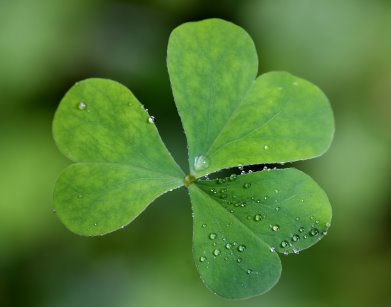 Shamrock
Find a shamrock,
green and bright.
God be with you
day and night.
People often confuse the shamrock with the four-leaf clover. While the four-leaf clover symbolizes good luck, Irish legend says that St. Patrick used the shamrock to demonstrate the principle behind the Trinity (an important doctrine in Christianity), therefore shamrocks have more significance as a religious symbol than a symbol of good luck.
The Blarney Kiss
I always kiss me parents,
I even kiss me sis—Eeew!
I kiss me Great Aunt Erin,
And Uncle Patrick too.
But of all the kisses I’ve given
including those I’ve blown,
The kiss I like to give the most
is the one on the Blarney Stone.
The Blarney Stone is an actual piece of stone in the Blarney Castle, near Cork, Ireland. According to legend, those who kiss the stone are blessed with eloquence, meaning they become skilled at flattery.
A St. Patty’s Day Fib
Green
Shamrocks
Leprechauns
Kiss the Blarney Stone
Don’t you just love St. Gomer’s Day?
For more fun fibs, go to Gregory K.’s blog here.
Happy St. Patrick’s Day!
As you know, I LOVE IT when someone shares a great website or blog that helps authors. Today, Alexis O’Neill shared a cool website on our SCBWI listserve. It’s called Book Tour: Where Authors and Audiences Meet. For published authors, this site serves as another way to get the word out about you, your books and your appearances–and it’s free! The site says it’s a Beta version, which means it’s in its trial stages, but it seems like a great idea and quite a few authors have already signed up. Click HERE to check it out! (click on “Kids” on the upper right hand box to see all of the wonderful children’s authors listed).
Those of you who read Publisher’s Weekly might have read some disturbing news about the Reading is Fundamental program (RIF). Here is how the RIF website summarizes it:
“The President’s proposed budget for fiscal year 2009 eliminates the Inexpensive Book Distribution Program, which is the RIF Book Distribution Program. Unless Congress reinstates funding for this program, RIF will be unable to distribute 16 million books annually to the nation’s youngest and most at-risk children.”
RIF is the oldest program of its kind, starting in 1966. For many at-risk and less advantaged children, the RIF program is the only way for them to have books of their own. Think about the first book that you knew was YOURS. Remember that feeling of wonderment and how you read it over and over again? Now imagine how many kids will never have that happen if the RIF program is gone. Having books excites kids about reading (I won’t go into the pros of reading—I think I’d be preaching to the choir on that issue!). We must do what we can to try to save this program.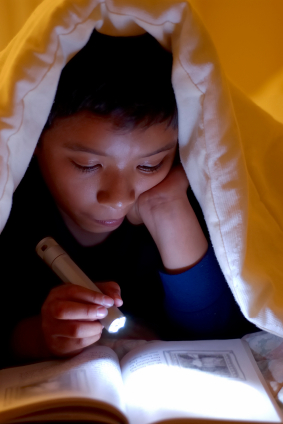
Please-please-please—act now by going to the RIF website (CLICK HERE) and following their simple instructions for locating your political leaders (congressmen/women, state senators, and the president himself) and asking them for their support in continuing to fund RIF. It’s very simple and only takes a few minutes to complete (and isn’t it worth a few minutes of your time to help put books into the hands of less fortunate kids?).
Thank you!
Terry
Last night I discovered another terrific blog that I had to share. Author Kim Norman has created a blog that lists author who do school visits by state. It’s a one-stop visit for educators who are looking for visiting authors. How cool is that? Check it out, “Author School Visits by State.”
On her blog, “Fresh From the Oven” Catherine Ipcizade shared the ups and downs of her book launch at the Santa Ana Zoo, for her new book, ‘Twas the Day Before Zoo Day. What I really loved about this was that Catherine shared with readers what *didn’t* work, as well as what did. We’ve all had those events where things didn’t go as planned so her experiences were totally relatable!
Another mucho-generoso blog post I read this week came from the website of author Evelyn B. Christensen, where she posted a list of educational publishers and their submission information. This was a lot of research on her part, and to share it as she did deserves a round of applause!

 Graham Salisbury is one of my favorite authors. I recently read Night of the Howling Dogs and loved it. Inspired by an actual event (the 1975 7.2 earthquake in Halape, Hawaii), he has created a fiction story based on the horror that Boy Scout Troop 77 of Hilo, HI actually experienced while camping at Halape, during the quake and subsequent tsunami.
Senior patrol leader and eighth-grader Dylan, eagerly anticipates camping on the beach at Halape with his Boy Scout Troop, in the shadows of Mauna Loa; but when Dylan discovers that his scout leader has invited Louie (a hardened street kid with a rough past) to join the boys, all enthusiasm is gone. Dylan and Louie have a bit of a past, and the threat that Dylan feels from Louie weighs heavily on his mind.
While making the difficult trek through barren lava fields, Dylan spots two dogs in the distance—an odd thing to see in such a desolate location. The troop finally arrives at Halape, a pristine Hawaiian beach. After settling in for their first night at camp, Dylan hears the dogs howling and wonders if it’s some kind of omen.
Later that night, disaster strikes in the form of a massive earthquake, followed by a tsunami that washes the beach clean of all who inhabited it. Together, Dylan and Louie survive the aftermath of Pele’s anger; saving their fellow scouts, scout leaders and a group of paniolos (Hawaiian cowboys) who were also camping there.
Salisbury’s knowledge of Hawaii and his natural and unobtrusive style of weaving Hawaiian legend into contemporary times are masterful. He creates a compelling yet sensitive adventure story that will have readers turning the pages. This middle-grade novel received a starred review from Booklist, was a 2007 NAPPA Gold Award (National Parenting Publications Award) and was listed on the 2007 New York Public Library’s 100 Titles for Reading and Sharing.
Night of the Howling Dogs by Graham Salisbury/ISBN-13: 978-0385731225 /2007 /Wendy Lamb Books
I recently posted my book trailer for BLACKBERRY BANQUET (click here to view) and I was surprised at the response from other writers. Some wanted to know how I did it; some said they impressed because they could never do such a thing. Well, I’m here to say that YOU CAN! It wasn’t as hard as I thought it would be—the main thing for me was to go into it with a learning attitude. Play around, tinker, and don’t pressure myself. I told myself it could take months to complete.
Here are some tips and tidbits of info, based on my own experience:
I used Windows Movie Maker. I didn’t realize I even had it on my computer, until someone pointed it out to me. I found it by clicking on the START button (lower-left corner), went to PROGRAMS then ACCESSORIES then voila! There it was. Because I’m generally one of those people who reads the instructions before starting something, I first read about the program from the HELP menu, just to get an overall sense of what I was in for .
Next, I did thumbnail sketches of what I wanted on a notepad. I knew I wanted to keep it around 60 seconds (like an average TV commercial) and I didn’t want to have more than 20 images, including the text-only images. Once I had my thumbnails (aka, roadmap), I used Adobe Photoshop to select and size my images (note: I had already contacted my publisher about the project and received permission to use the artwork—she was so happy about my doing this that she not only gave permission, she ultimately resent all of the art images in higher resolution images).
In WMM (Windows Movie Maker), I figured out (from the Help menu) what frame size the program uses, and I made my images conform to that size. I knew this would make the transition easier later, when I would import the images into WMM. In Photoshop, I also created the text-only frames. Note: Be sure to include a frame with your publisher’s website, your website and book ordering info. After all, you are trying to promote your book!
Next, I opened up WMM, and began importing my images. That was the easy part. Once they were all there, I had to determine the length of time on each frame (by clicking on the thumbnail image at the bottom and dragging it to the desired time), and what kind of transition effect I wanted from one frame to another (by right-clicking on the thumbnail image then clicking on “Video Effects”). This is where the real fun began—lots of tinkering and playing around!
Once I had the frames in place and was pleased with the overall look, I did a music search. There are all kinds of royalty-free music sites on the internet. I found mine on “The Music Bakery” but as I said, there are many out there. I should add too, that this was probably the lengthiest part of the entire process—finding the perfect music. I purchased the music (prices vary), but once I did, it was mine to use and I won’t have to worry about copyright issues.
Downloading the music to my computer then to WMM was a bit tricky for me, but some great websites on the internet guided me through. One of my favorites was the Papa John site. A couple of times, I also Googled my questions and was able to find the answers.
Once I had the music downloaded, I put it to the video clip, and then tinkered with the timing. I shortened some transitions or frame lengths, doing what was necessary to make it all fit.
Once I was finished, I saved the file to my computer (the file in WMM is a project file, so you have to save it separately onto your computer to be able to email or upload it to the internet). I sent it to my editor, for her opinion. With a tiny bit more tinkering, I was completely finished.
The entire process took me about four days, but as I said, it really was fun and gave me a chance to indulge in a whole new kind of creativity (plus, I saved myself about $300-400, what I had found was the fee for a professional to make one for me). So, don’t sell yourself short–give it a try! Since I shared this with my fellow Sylvan Dell authors, another author, Sherry Rogers, has created her own (click here to view). And if you want to see a terrific sampling of many wonderful children’s book trailers, click here.
Happy movie making!
The writing business is like an emotional sea. It definitely has its peaks and troughs. Many things take us to the crest of a wave—
The feeling of satisfaction when you finish a long, hard project.
Getting a personalized rejection letter from a respected editor or agent who compliments your work.
Getting a contract offer.
Receiving a phone call from an agent wanting to represent you.
Receiving a surprisingly high royalty check in the mail.
Getting an email or letter from a child telling you how much they loved your story.
These are all good things that keep us going. They take us to the pinnacle of that wave and let us feel like Neptume, in control of the sea.
But we can’t always ride the crest now, can we? Call it yin and yang, the balancing of the universe, or in my case, sliding down into the trough of the wave, but whatever you call it, there are those things that don’t make us feel quite as uplifted—
Your computer goes bonkers and eats your story that you’ve worked on for eight months.
You get a form letter rejection from an editor for whom you felt a lot of optimism.
Your dream agent declines to represent you after requesting to read your full manuscript.
You hear from an editor that your manuscript had made it quite far in the editorial selection process, but was just shy of being accepted.
You eagerly anticipate your first royalty check, only to discover it will barely buy you a cup of coffee and an espresso brownie at Starbucks.
You get a bad review.
This list could go on, couldn’t it? We’ve all had our ups and downs. Now, before you start thinking this is a big old whine-fest, let me say there’s a point. I’m curious to hear how other writers handle the “troughs” of writing. I don’t mean writer’s block or writer’s blahs; I mean how you handle those disappointments that make you stop in your tracks and question things. Personally, I have a few different coping methods—sometimes I just shake it off within a few minutes, sometimes a long walk puts things into perspective, sometimes indulging in my favorite chocolate helps (well, it helps my mind, but not my hips).

What do YOU do to get out of the troughs and work through the disappointments in writing? Make a comment–I’d love to hear from you!
 Terry Pierce


You must be logged in to post a comment.