5

Is Your Book a Dummy? It Should Be!

Book dummy. Kids laugh when I say this. New writers might think I’m insulting their story. What exactly is a dummy? And where, I wonder, did the flattering term come from? In the publishing world, it’s a manuscript that’s laid out in book form, with one or two pieces of finished art. It’s an important tool for author/illustrators who want to show their story with some of the art. But dummies can help us non-artistic, picture book and easy reader writers as well.

I think dummying out a manuscript is one of the best tools at a writer’s disposal. I frequently dummy out my stories after that initial feeling that it’s finished (usually around the third or fourth draft). Once the story has gelled and I have a strong sense of the plot, I know I need to work even harder on word choice, pacing, flow and finding those defining page turning moments. And that’s where a dummy can help.

How do you make your manuscript a dummy? Don’t send it to school! (ha-ha). Okay, seriously… It’s simple. All you need are eight sheets of blank paper, a stapler, your manuscript, scissors and removable tape (sounds like art class, huh?).
1. Collect the 8 pieces of paper (doesn’t really matter what size, but I use 11 x 14” legal size).
2. Cut them in half (midway down the long side).
3. Staple them together. You know have a mock-up for a 32-page picture book (standard length for most picture books–the exception being 48-page books for older readers).
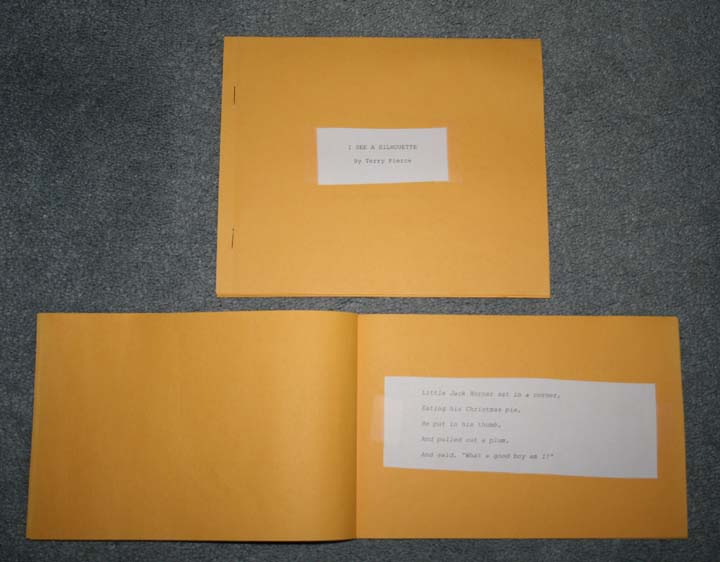
Now comes the fun part. Take a hard look at your manuscript. Try to envision it in scenes. Remember, a picture book has 13-15 page spreads, so you’ll have to have at least this number of scenes in your story. Okay, back to envisioning… You can either play around with where the scenes fall by marking it with a pencil, or you can start cutting.

On your dummy…

4. The “cover” of your dummy is where the title page of the actual book would go, so cut your title out and tape it there.

5. The next page is where the copyright info and dedication usually go (on the left-hand side of the page spread), so I just note © on that page.

6. Then, depending on how you envision your story beginning, you can begin cutting and taping your manuscript. If you have a short, snappier start, you can start it right there on page 3. If you see it as a scene that requires a full-page spread, then go to page 4-5.

7. Continue cutting and taping, playing with it until you’ve worked it into the full dummy. I guarantee you’ll find spots that scream they need more revision, and others that will fit perfectly. Wordy scenes will stand out, sparse scenes will too. You’ll discover some great page turning places that will carry the suspense and add to the tension.

8. Once you’ve make changes to the dummy, add the changes to your manuscript.

Okay, now here’s the hard part. As much as you now looooove your dummy, DO NOT send it to an editor. This is a learning tool for your eyes only (or your critique group). Editors do not want to see our cut and tape efforts (unless they specifically ask for it). Really. Cross my heart.

After I’ve made the changes to mymanuscript, I put it away for a few days. Then I go back and start over (read, make changes, dummy it out again). I usually end up with 3-5 dummies per story I write.

I hope you find this as useful of a tool as I have. Happy dummying!

One More Marketing Book!

I almost forgot to mention one of my favorite marketing books!

How to Promote Your Children’s Book: A Survival Guide for Published Authors by Evelyn Gallardo.

This one is a great reference for newly (and not so newly) published writers who are interested in doing school visits, signings, and other forms of PR.

2

Marketing Books

Here’s an observation. Last month, when I asked folks what their favorite books on writing were, I received a large number of responses. This month, when I asked about favorite books on marketing, I received a handful. Hmm…I think this reflects what many writer feel (this one included)–that they LOVE writing and HATE marketing.

With that in mind, here is a list of some recommended books on marketing.

1001 Ways to Market Your Book by John Kremer
An Author’s Guide to Children’s Book Promotion by Susan Salzman Raab
The Frugal Book Promoter: How to Do What Your Publisher Won’t by Carolyn Howard-Johnson
The Complete Guide to Book Publicity by Jodee Blanco
The Shy Writer by C. Hope Clark
Guerrilla Marketing for Writers by Jay Conrad Levinson, Rick Frishman and Michael Larsen
Publicize Your Book! by Jacqueline Deval
The Children’s Writer’s & Illustrators Market Guide by Alice Pope.
It’s a Bunny Eat Bunny World by Olga Litowinsky
Plug Your Book! by Steve Weber.
Any of the marketing books by Seth Godin
2

Recommended Books on Marketing

If you recall, last month I asked folks about their favorite books on the craft of writing, with the promise that I’d ask about marketing books at a later date (because like with our work, we need to focus on the craft before we even think about marketing).

Well, it’s later. Not a lot, but enough to where I’m ready to ask the question: What’s your favorite book on marketing?

Here are some of my favorites:

The Children’s Writer’s & Illustrators Market Guide (okay, that was a no brainer) by Alice Pope.
It’s a Bunny Eat Bunny World by Olga Litowinsky.
Plug Your Book! by Steve Weber.

Okay, I told you mine. Now, what’s yours?

New CYBILS Award Category!

The CYBILS (Children’s and Young Adult Bloggers’ Literary Award) has added a new category to their list of contest genres: Easy Readers. Yea for easys!!! I love seeing easy readers added to the contest. I’ve always said it’s the most overlooked genre in children’s literature and this is another step in recognizing their significance. And guess what? I’m a judge for this year’s contest! Yowza! I’m so looking forward to reviewing the finalists and working with the other judges.

If you want to read more about the CYBILS, click here. Nominations begin Oct. 1, so start thinking about your favorite books of 2008 so you can nominate them.
2

Book Trailers, Etc.

The ladies (that would be Laura Purdie Salas and Fiona Bayrock) over at Bubble Stampede ran a nice post today about children’s book trailers. I absolutely delighted that they mentioned Blackberry Banquet’s trailer, amongst others. And a little bird told me that they’re going to do a follow-up post about creating book trailers too, so be sure to look for that upcoming post.

On the note of making book trailers, if you’re interested in making your own, please feel free to read my previous post on how to create your own book trailer. If you’re just too busy or don’t feel you have the creative knack to undertake such a project, my writing buddy Tina Nichols Coury can help you out. You can check out a sample of her most recent work on her website by clicking here.

Happy trailer-ing!

Recommended Books on Writing

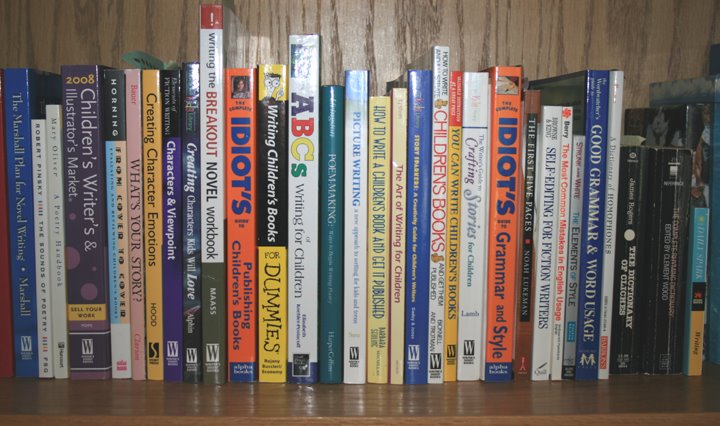
Okay folks, here is the list of favorite books on writing. I was happy to see that many writers (thank you, fellow V/SB SCBWI listservers!) shared books that I already have on my bookshelf along with some others that I haven’t read yet. I hope you’ll add some to your book list. Happy reading!

Writing in General:
Self-Editing for Fiction Writers by Renni Browne & Dave King.
The First Five Pages by Noah Lukeman.
The Plot Thickens by Noah LukemanSave the Cat! by Blake Snyder.
Bird by Bird by Anne Lamott
“Winter Room” prologue called “Tuning” by Gary Paulsen
On Writing by Stephen King
The Art of Dramatic Writing by Lajos Egri The Art of Fiction by Ayn Rand
The Romantic Manifesto by Ayn Rand
Aristotle’s Poetics
Writing the Breakout Novel by Donald Maas
Dear Genius: The Letters of Ursula Nordstrom by Leonard Marcus

Children’s Writing:
How to Write a Children’s Book and Get It Published by Barbara Seuling.

Picture Writing by Anastasia Suen.
The Art of Writing for Children by Connie Epstein.
You Can Write Children’s Books by Tracey E Dils
The Complete Idoit’s Guide to Publishing Chidren’s Books by Harold D Underdown and Lynne Rominger
Creating Characters Kids Will Love by Elaine Marie Alphin
Poem Making by Myra Cohn Livingston
3

What’s Your Favorite Book on Writing?

Happy summer, everyone!

Summer is a great time to catch up on reading, and while I always have a stack of children’s books nearby to read, I also use this time to read books on the craft of writing. I know I have my personal favorites that I’ve read and re-read, and I wondered if any of you would like to share your favorites too. So how about it? What’s your favorite craft book on writing (or writing and illustrating) for children (not marketing–just craft).

I’ll start with my three most favorite (and I’m not counting The Elements of Writing by Wm. Strunk and E.B. White since it’s a given that we all own a copy). Oh wait, I just checked my bookshelf and realized it’s impossible for me to narrow it down to three! I’ll try five.

Hmm…okay, this won’t work either. Too tough! I’ll break it down into two categories; Writing for children and Writing in General, and I’ll keep it at three titles. Here they are:

Writing in General:
1. Self-Editing for Fiction Writers by Renni Browne & Dave King.
2. The First Five Pages by Noah Lukeman.
3. Save the Cat! by Blake Snyder.

Writing for Children:
1. How to Write a Children’s Book and Get It Published by Barbara Seuling.
2. Picture Writing by Anastasia Suen.
3. The Art of Writing for Children by Connie Epstein.

Some of these are the books on which I cut my writer’s teeth and have much special meaning to me. Some are a bit more recent, but they all provide wonderful information for how to get started and how to fine-tune your work.

Oh, I could go on and on, and after I receive some of your suggestions, I will! I’ll post a full list of everyone’s suggestions after a few days.

Thanks for leaving a comment with your favorite writing books. I’m looking forward to seeing your recommendations!