Spring has sprung in the high desert and once again I’m reminded of what Ralph Waldo Emerson once said.
“The earth laughs in flowers.”
Need I say more?




Those of you who read Publisher’s Weekly might have read some disturbing news about the Reading is Fundamental program (RIF). Here is how the RIF website summarizes it:
“The President’s proposed budget for fiscal year 2009 eliminates the Inexpensive Book Distribution Program, which is the RIF Book Distribution Program. Unless Congress reinstates funding for this program, RIF will be unable to distribute 16 million books annually to the nation’s youngest and most at-risk children.”
RIF is the oldest program of its kind, starting in 1966. For many at-risk and less advantaged children, the RIF program is the only way for them to have books of their own. Think about the first book that you knew was YOURS. Remember that feeling of wonderment and how you read it over and over again? Now imagine how many kids will never have that happen if the RIF program is gone. Having books excites kids about reading (I won’t go into the pros of reading—I think I’d be preaching to the choir on that issue!). We must do what we can to try to save this program.
Please-please-please—act now by going to the RIF website (CLICK HERE) and following their simple instructions for locating your political leaders (congressmen/women, state senators, and the president himself) and asking them for their support in continuing to fund RIF. It’s very simple and only takes a few minutes to complete (and isn’t it worth a few minutes of your time to help put books into the hands of less fortunate kids?).
Thank you!
Terry
The writing business is like an emotional sea. It definitely has its peaks and troughs. Many things take us to the crest of a wave—
The feeling of satisfaction when you finish a long, hard project.
Getting a personalized rejection letter from a respected editor or agent who compliments your work.
Getting a contract offer.
Receiving a phone call from an agent wanting to represent you.
Receiving a surprisingly high royalty check in the mail.
Getting an email or letter from a child telling you how much they loved your story.
These are all good things that keep us going. They take us to the pinnacle of that wave and let us feel like Neptume, in control of the sea.
But we can’t always ride the crest now, can we? Call it yin and yang, the balancing of the universe, or in my case, sliding down into the trough of the wave, but whatever you call it, there are those things that don’t make us feel quite as uplifted—
Your computer goes bonkers and eats your story that you’ve worked on for eight months.
You get a form letter rejection from an editor for whom you felt a lot of optimism.
Your dream agent declines to represent you after requesting to read your full manuscript.
You hear from an editor that your manuscript had made it quite far in the editorial selection process, but was just shy of being accepted.
You eagerly anticipate your first royalty check, only to discover it will barely buy you a cup of coffee and an espresso brownie at Starbucks.
You get a bad review.
This list could go on, couldn’t it? We’ve all had our ups and downs. Now, before you start thinking this is a big old whine-fest, let me say there’s a point. I’m curious to hear how other writers handle the “troughs” of writing. I don’t mean writer’s block or writer’s blahs; I mean how you handle those disappointments that make you stop in your tracks and question things. Personally, I have a few different coping methods—sometimes I just shake it off within a few minutes, sometimes a long walk puts things into perspective, sometimes indulging in my favorite chocolate helps (well, it helps my mind, but not my hips).

What do YOU do to get out of the troughs and work through the disappointments in writing? Make a comment–I’d love to hear from you!
 This past weekend I attended a fabulous writers’ retreat through the Ventura/Santa Barbara SCBWI chapter. I spent Thursday and Friday packing my book bag (loaded with 13 critiqued mss for my fellow group members, my notebooks, first pages, complete mss in case my dream miracle occurred and an editor asked me if I had the complete ms on me so she’d have reading material on the plane) and my personal belongings (still managed to forget my robe–nighttime sprints to the bathroom way down at the end of the hall were interesting, to say the least).
 Out of the mouth of babes…
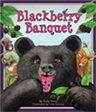 In January 2007, I received an acceptance call from Sylvan Dell for Blackberry Banquet. Last week, I received a preview of the finished artwork for the entire story (publication date July 2008). Sorry folks, no sneak previews here, under strict orders from my publisher. However, I can say that the artwork is adorable. Dare I say it? Okay, I will—it’s CUTE! Very cute! I think preschoolers will love this book.
Seeing the artwork made me think about the time involved in creating this book. Consider this—I wrote the first draft of the story in the summer of 2002 and began subbing it to publishers in late 2003. Sylvan Dell accepted it in January ’07 and a year later I’m now viewing the finished artwork. It will take seven more months for the finishing design (editing, text layout, etc.) and printing. That’s six years from when my pencil touched the paper until the publication date. Yes, it takes time all right!
Once, three months after I’d stopped teaching and had begun writing, someone asked me if my first book was out yet. Heck, I was still learning how to format a manuscript! But herein lies the “problem.” I think it’s a common misconception that picture books are easy to write, easy to draw and easy to publish. Uh…pardon me while I go pound my head against the wall.
 I often say that this business works in glacial time. During a recent visit to Yosemite National Park, I pondered the glacially carved granite walls of Yosemite Valley and thought about the publishing business–how it too involves great amounts of time in the creation of something amazing. It takes months to years to write a picture book and sell it to a publisher. The average time from acceptance to published book can range from one year (which is very fast) to three years or more, in some cases (I currently have an easy reader that is now at four years after acceptance with no pub-date in sight).
Why such a long production period? A few reasons, actually. First, how long it takes the publisher to determine the right illustrator for the project (matching art style to story is key). Second, how quickly the illustrator can get to the project (successful/popular illustrators might be booked with other projects for months or years). Third, how quickly the illustrator can finish the project (creativity takes time). Fourth, how fast the publishing company itself works. Fifth, the baseball factor (whether the sun gets in your eyes, the grass is too tall or your mitt is too tight)—meaning, all of the other extraneous things that can happen to slow things down.
But the good news is, approximately five thousand children’s books are published annually, so despite global warming, the kid-lit glacier is still inching forward. And with that movement is the hope that your story will become one of them. It may take some time, but it can happen!
Good luck in 2008 for finding your publishing successes!
As another the year comes to the end, I once more think about the things that have happened in the past and what might come in the future. I’ve got so much to be thankful for, but I’ll keep it writing-related 🙂 (you’re welcome!).
Last year couldn’t have begun any better, with Sylvan Dell’s acquisition of Blackberry Banquet. January also brought the release of my award-winning picture book series, Mother Goose Rhymes. I also found out that my easy reader, Tae Kwon Do! was named on the Bank Street College Best Children’s Books of 2007. For the first time ever, I was receiving “outside” validation for my writing (something that I believe all writers need, no matter where we are in the process). That same month, I also attended a fabulous Ventura/Santa Barbara SCBWI Retreat on cyber-promotion, which led to my blog.
I was also able to do some school visits, which I loved. I attended many educational and enlightening SCBWI events and did some other fun speaking engagements. I was surprised in July when I found out that Sterling Publishing was using jokes from Greatest Goofiest Jokes as part of a compilation joke book, Laughin’ Jammin’ Slammin’ Jokefest. And I finally *finished* my first novel, Out of the Storm (of course, we all know that a novel isn’t really finished until it’s acquired and your editor says its finished). Yes, it’s been a very good year.
Looking ahead, I now get to shop my novel around, along with a handful of other picture book and easy reader manuscripts that I’ve toiled over for quite some time. I look forward to doing more school visits, book signings and discovering those seeds of stories that are still hidden deep in my mind. I’m eagerly anticipating the release of Blackberry Banquet in July and looking forward to working with Sylvan Dell in promoting it. And I’m looking forward to continuing with my blog, hopefully reaching my goal of helping other authors, sharing some of my experiences and contributing to the writing community that has helped me so much.
I’m going to take a little “winter vacation” from blogging, from Dec. 21 – Jan. 7. Please check back in with me in January.
I wish you the happiest of holidays and a very prosperous new year!

Here are a few more bits of wisdom I’ve come to notice in regards to author photos (you may recall my recent post on the subject)…
Snapshots: On rare occasions, snapshots have their place, but they really do belong more in the family album and not representing you as a professional writer. The problem with snapshots is that we love them because they capture a moment in time that’s special to us, but the rest of the viewers (editors, other professionals, potential book buyers) don’t get that. While a snapshot may make you feel all warm and fuzzy about that moment when you stood on the windswept cliff, all they see is your hair blowing every which way and you bundled up in so many layers that you look like a polar bear.
Amateur photos: These are better than snapshots, and when done well, can be just as effective as a professional photo. Try to use good lighting (outdoor/natural light works well), a natural look and pleasant background. Here are some things to be careful of: the busy writer hard at work at her desk, where the writer literally is lost amongst the clutter (I KNOW she’s in there somewhere!). Or, the writer/illustrator standing in the garden, but doesn’t realize that the background foliage makes it look like she has antlers or Martian antennae sticking out of her head. Remind your photographer to check the background as well as you, the subject. I recently had my husband take a picture of my in front of a blackberry bush, to promote my upcoming book, BLACKBERRY BANQUET (Sylvan Dell 2008). I made sure that the background was not dominating me. I wanted to be the standout, not the berry bush.
In addition to being aware of backgrounds that consume you, know that clothes and jewelry can do the same thing. The key—keep it simple! Simple clothing ad accessories won’t swallowed you alive. Whether you’re going for a casual look, a dressy look, or some sort of attire that ties into you book, make sure that it doesn’t overpower you.
One last comment: Don’t get me wrong about fun pictures that you can use to engage your audience and give them a sense of who you are (that’s where snapshots come in). Your readers, especially kids, LOVE to see a bit of your personal side. 
 Shiver me timbers, today not only be me dad’s birthday, but tis also “Talk Like a Pirate Day!” Grab yer eye patch, put some swagger in yer step and swig down a bottle of …hmm, this is a children’s writing site…uh, apple juice.
To celebrate, here are some of my favorite pirate-related books and movies:
How I Became a Pirate by Melinda Long.
Peter Pan by by J. M. Barrie.
Pirateology by William Captain Lubber and Dugald A. Steer.
Pirate Mom by Deborah Underwood.
Movies:
Hook
Treasure Island
Pirates of the Caribbean: Curse of the Black Pearl (the only one of the trilogy that’s worth a pirate’s weight in gold, but ah, it be a grand one at that!)
And for all ye scalliwags who need a refresher course in Pirate-speak, here be some glossaries that only be a rope’s throw away: Pirate Glossary and the Brethren of the Coast.
Last weekend my husband and I went to the Pantages Theatre to see WICKED. What a treat! I hadn’t read the novel, Wicked: The Life and Times of the Wicked Witch of the West by Gregory Maguire, so all I knew was that it was the backstory to The Wizard of Oz. And what a great story it was, not to mention the acting, singing, coreography and sets. I was reminded of the flood of fractured fairy tales in the children’s book market not too long ago. This was like one of those stories tenfold. If you get a chance to see it, don’t pass it up. It’s worth every penny.
 Terry Pierce


You must be logged in to post a comment.