UCLA is doing an instructor feature article on me this month, to promote my upcoming class. Okay, that is SO COOL! I mean, it’s U-C-L-A Writers’ Program! Go Bruins! Grab those pens and write-write-write!
Interested in Learning about Writing Easy Readers?
 Registration is now open for my upcoming online course, Introduction to Writing Easy Readers, offered through UCLA Extension Writers’ Program.
I am SO excited to teach this course. As some of you know from my workshops on this subject, I believe the Easy Reader genre is THE most important genre of children’s books because it is the one that sets a child onto the path of independent reading. In other words folks, this is where we either hook kids as readers or let them get away.
If you’re interested in enrollment and registration, please click here.
Hope to see ya’ll in my virtual classroom!
And So Another Chapter Ends…

Wow, it’s hard to believe that it’s been a month since I graduated from Vermont College of Fine Arts MWCYA program (that’s Masters in Writing for Children and Young Adults), but every time I check the calendar it’s confirmed. One month, all right. Here I am with my fellow graduates (L.E.C.S.) just last month at the beginning of the summer residency.
What an experience it was–too incredible to even begin to put into a blog post–and it’s incredibly bittersweet that it’s over. I’m happy to get my life back, but will sorely miss the learning experience and camaraderie of the VCFA community (yes, I can still stay in touch but it’s not the same when life doesn’t revolve around packet deadlines).
Maybe I can give more attention to my blog now–oh wait, revisions await, near-finished projects loom, there’s that issue of finding an agent. And a job… Hmm… Never mind.
MINI-VIEW: RUTH A. MUSGRAVE
MINI-VIEWS:
Pint-sized interviews that leave you smiling.
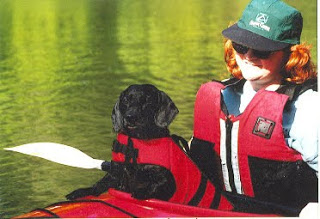
RUTH A. MUSGRAVE is the Director of WhaleTimes Inc. (http://www.whaletimes.org/) and an award-winning writer. In addition to National Geographic Kids Magazine, she has also written for Scientific American Explorations, SuperScience, and Ask. Her awards include Society of Children’s Book Writers and Illustrators Magazine Merit Honor Award for Nonfiction and two Emmy Awards from the National Academy of Television Arts and Sciences-Southwest.
In addition to teaching and writing, her background includes 25+ years developing and producing K-12 marine science education programs, curricula, professional development seminars, and a children’s television series.
While writing the NGK Everything Sharks, Ruth was inspired to create a holiday for sharks, called “Fintastic Friday: Giving Sharks a Voice.” She knew once kids discovered what magnificent and important animals sharks really are, they would want to protect them. Hosted by WhaleTimes, the holiday gives children a platform and opportunity to make a difference.
Congratulations on your success with National Geographic Kids Everything Sharks, just released this spring (April 2011). National Geographic is a “closed” house, meaning they don’t take unsolicited submissions. Could you give us some background on how you broke into this extraordinary publishing house and what it’s been like working for them?
Thank you. I’m so excited about my book. National Geographic Kids Everything Sharks is full of stunning shark photos and the layout is a delight to the eyes. Before you even get to the text, you can spend hours just looking at the photos. Writing it was fun because I was able to show sharks as they really are — these incredible, diverse, sometimes odd and quirky creatures. It has a lot of humor and tons of great information.
The best part is, kids will read about sharks and fall in love with the real animal, not some fictional beast. The vicious animal portrayed in movies, books, and television doesn’t exist. Sharks are extraordinary animals, but they are not invincible. They are in trouble and they need kids’ help.
 Hmmm, how I got my foot in the door at National Geographic Kids…well, Terry, I’d tell you, but then I’d have to…just kidding!
I have been fortunate enough to be a frequent contributor to National Geographic Kids Magazine for a many years. The editors knew about my marine science background and asked if I’d like to write about sharks for their very cool new “National Geographic Kids Everything” series. Working with such talented editors and a publishing house that loves animals, embraces the fun of science, yet prizes accuracy…well I still expect someone to wake me up from the best dream ever!
What is the best advice you can give for writers who want to write non-fiction (articles or books)?
This is a good question. Only write nonfiction if that’s what you really want to write. Become an expert about the topics that you love, figure out what age levels you like to write for, and, as you’re figuring that out, keep writing to find your own style or voice. I think readers want more than facts, figures, dates, or timelines. Your style should make the science, history, person, or whatever come to life.
What if you really want to write fiction, but heard from writer friends that starting in nonfiction is the easy way to go…get different friends! Okay, keep the friends, just get better advice! If you want to write fiction picture books or poetry or YA or…you should do that. Don’t get sidetracked. Getting published is hard enough. Don’t waste time and opportunities by writing in a genre you don’t love.
What is your favorite children’s joke?
Let’s see, how about my 10-year old daughter’s latest and greatest joke from school:
Q: How do you get a tissue to dance?
A: Put a little boogie in it!
Thanks so much, Ruth!
"First Story" in Ladybug Magazine February 2011 Issue
 Some things just take time. Aged cheese, fine wine, glacially-carved valleys…and my first story in Ladybug Magazine. No, not my first story to be published, nor do I mean my first story in Ladybug (although this is my first one). I’m referring to the first children’s story I ever wrote. Twelve years ago.
I wrote “The Desert Snow” when I first got that spark of an idea that I should try writing for children. The story idea came to me when it had snowed in the California high desert, where I live. I worked on it as a picture book concept for a few weeks then eagerly submitted it for a critique at the upcoming SCBWI National Conference. All fifteen pages of it. Yep, I’d written a 15-page picture book manuscript that had more twists and turns than Lombard Street in San Francisco (!). BUT, I was fortunate enough to have had Lisa Rojany Buccieri as my critiquer. She kindly told me that while my writing had real potential (okay, she used the term “great” :-}, I had to learn the basics of writing a picture book. My story was way too long and lacked focus and structure, but if I could learn how to do those things, it had publishing potential. That was all the encouragement I needed. Thank goodness for good editors!
I kept at this story off and on for years, and after many, many revisions, it was picked up by Ladybug Magazine in 2006. Four years later, I’m proud to say that the story will finally be published, featured in the February 2011 issue of Ladybug Magazine. Not only do I feel the pride in seeing a project through and getting to see it in print, but I have the joy of seeing it illustrated by Siri Weber Feeney, a talented writer-illustrator and good friend of mine (which Ladybug independently hired to do the art work–talk about serendipity!).
 Despite having other works published, this story represents a real personal victory for me, as it validates that first inkling I had so many years ago, and the payoff of being a determined writer.
Ladybug has made the entire issue about the desert. Lots of fun games, songs, stories and poems all centered around this theme. If you click here you can also find a desert snow game, amongst other things. So look for the February issue in bookstores soon!
Picture Book Article in PW
Here’s a great article from Publisher’s Weekly as a follow-up to the October NYT article that stirred up so much controversy about the state of picture books in today’s market. I think this much better addresses the issues facing picture books.
Enjoy!
Five Reasons Why Children NEED Picture Books
 A New York Times article recently stirred up a lot of discussion amongst the children’s lit community about the future of picture books. I don’t think the decline in sales was news to anyone. Picture book sales have been slowly dropping for about the past ten years because of changing demographics. And with the economic downturn of 2008, no one is surprised that people are thinking twice before spending $16-$18 for a picture book.
However, the part of the article that concerned me was the claim that parents are “skipping” picture books and heading straight to chapter books in an effort to “advance their children’s skills.” The idea of doing this is simply absurd. This would be similar to a parent saying that they would not allow their baby to crawl because learning to walk sooner would make him/her a better runner, headed for an Olympic bid.
It just isn’t true. Or smart.
There are basic developmental stages a child progresses through in order to develop normally (by “normally” I mean develop according to the expected, universal stages of human development). And here is where picture books fit in.
Picture books offer benefits to children that no other genre can. One cannot simply “skip” them and advance onto chapter books because picture books and chapter books are NOT THE SAME. Just like crawling and walking. Crawling teaches forward movement, coordination of limbs and exercises both sides of the brain—all in the safety of being at ground level. Picture books enrich a child’s life in many aspects and prepare him for reading chapter books and his future learning–in the warm embrace of a parent or other caregiver. It is all good, and all necessary.
I hope there will be much discussion about picture books in the upcoming weeks, months and years. They are an important part of children’s literature and childhood. I believe the NYT article should serve as a reminder for us all to be picture book advocates. So, in my attempt to do just that, here are:
FIVE REASONS WHY CHILDREN NEED PICTURE BOOKS
LANGUAGE:Young children (ages two-seven) are at a peak age for learning language. Dr. Jane Healy (Endangered Minds: Why Children Don’t Think and What We Can Do About It) notes that the young child’s brain is ravenous for language stimulation. This is why it is often suggested that children learn a second language at this age. They soak up language like a sponge.
Because the average picture book only has about 500 words, an author must craft each and every word, sentence and paragraph with care. Editor Anne Hoppe once said of picture books: “The writer distills; the illustrator expands.” Picture book writers must distill language to its very essence. This is why the text in a picture book is often rich, evocative, and engaging. Hearing this type of language will enrich a child’s language development.
BRAIN DEVELOPMENT:Dr. Healy (Your Childs’ Growing Mind) also explains that during early childhood, the brain buzzes with extra neurological connections that are trying to establish patterns, cause and effect, and sequences. Picture books, with their verbal and visual nature, offer this to a child’s growing mind. For example, in Bill Martin Jr.’s Brown Bear, Brown Bear, What Do You See? a child hears the verbal clue of a rhyming word and sees the visual clue of the upcoming animal to be named on the next page. This type of pattern and sequencing helps to build the neurological pathways in a child’s brain. This kind of patterning within a verbal/visual format is unique to picture books.
PHYSICAL PARTICIPATION:Another unique aspect of picture books is the child’s physical participation in the story via the page turn. The words and illustration allow the child to experience what is happening on any particular page; however, advancing the story—physically turning the page—requires action on his part. This type of participation sets up an interactive experience between the child and the story. This participation also keeps the child engaged and helps to establish cause-and-effect brain pathways, as mentioned above.
ATTENTION SPAN:
Because of their unique structure, picture books can help a child increase his attention span, going beyond an interesting story (which is common to all genres). How many picture books have you seen with a refrain that keeps a child listening—eagerly anticipating his moment to chime in? Children will sit on the edges of their seats (or knees) awaiting their moment to be an active part of a story. Have you ever seen a group of children listen to Don’t Let the Pigeon Drive the Bus! by Mo Willems?
PICTURE BOOKS ARE MULTI-SENSORY:
Children’s author Mem Fox says in her book, Reading Magic: “Children’s brains are only 25 percent developed at birth. From that moment, whenever a baby is fed, cuddled, played with, talked to, sung to or read to, the other 75 percent of its brain begins to develop. And the more stimulation the baby has through its senses of touch, taste, smell, sight, and hearing, the more rapidly that development will occur.” Re-read that last sentence. The more stimulation through the senses, the more rapid the development occurs.
Children’s author Mem Fox says in her book, Reading Magic: “Children’s brains are only 25 percent developed at birth. From that moment, whenever a baby is fed, cuddled, played with, talked to, sung to or read to, the other 75 percent of its brain begins to develop. And the more stimulation the baby has through its senses of touch, taste, smell, sight, and hearing, the more rapidly that development will occur.” Re-read that last sentence. The more stimulation through the senses, the more rapid the development occurs.
Multi-sensory learning is critical during the early childhood years, and no other book genre offers this kind of sensory-based experience. While listening to and looking at a picture book, a child sees the pictures, hears the words, touches the pages (or other tactile features, such as touch-and-feel books), and smells the pages (such as scratch-and-sniff books). The only thing a child wouldn’t do with a picture book is taste it (although infants and toddlers might disagree).
Dr. Maria Montessori advocated that children absorb impressions and knowledge directly from their environment via their senses. Picture books are an important part of the learning process. No other type of books gives young children the opportunity to experience a story on so many sensory levels.
I hope this has given you some reasons to consider the benefits that picture books uniquely offer a young child. For a comprehensive list of excellent picture books, please visit Elizabeth Bird’s Fuse #8 blog.
Happy reading!
Time is flying…
Good heavens, I can’t believe how quickly time passes by. This week I handed in my mid-semester evaluation for Vermont College (halfway through my third semester). Next week I turn in my (hopefully) final draft of my critical thesis (more on that later). And I just did my first virtual classroom visit via Skype with R.A Mitchell Elementary School in Alabama (and what a delightful group of third graders!).
It’s been a busy week!
Oh, and for a good laugh, check out this book-related video clip. This one came from Julie Larios, my advisor extraordinaire. Not only is Julie an awesome writer and teacher, she’s great at finding fun “distractions.”
Check Out This Article

Check out this article from Hunger Mountain by Nikki Grimes. She speaks to such an important topic, and just about says it all. People need to hear this.
Especially now.
The "Everything Under the Moon" Group
 This is the “Everything Under the Moon, Writing with Fingers on Fire” VCFA fall 2009 picture book semester group; and some of my most favorite writer friends on the planet.
Left to right, front row: me, Mary Cronin, and Kathi Appelt (advisor extraordinaire). Left to right, back row: Barabara Bishop (graduating on Tuesday–yea, Barbara!), Abby Aguirre and Meredith Davis.
Having lunch with these lovely ladies has been one of my personal highlights of the residency thus far because really–isn’t there nothing like getting together with “old” friends?
 Terry Pierce
You must be logged in to post a comment.