4

GOOD NEWS

I have a few good things to post. The first, my Snoopy Dance news is that I found out yesterday from my publisher at Sylvan Dell that I will be participating at Book Expo America this year at the LA Convention Center! They weren’t sure if Blackberry Banquet (click here for a sneak preview) would be available by then, but despite its July 10 release date, it will. They’ll have advanced copies available for me to sign, so mark your calendars for the last weekend in May.

I’ve never attended BEA and I’m very excited. It’s such a huge event with so many publishers and authors—and to be a signing author is a thrill. My already overactive imagination is running amuck with thoughts of whom I’ll be seated near. I mean, isn’t it every children’s writers dream to get to rub elbows with Jane Yolen or Richard Peck (even if it’s from a distance and a line of people separates our elbows).

The other good news is that I recently heard from Roxyanne Young of SmartWriters.com. She has decided to run the WIN competition (Write It Now) again this year. It will be open for entries beginning in August 2008, so mark your calendars and watch the SmartWriters website for updates.

One last bit of cool information. Author Bruce Hale, of Chet Gecko and Underwhere fame, is offering a 39% discount on the first four CDs in his Teleseminar series on writing and publishing (targeted toward beginning and lower-intermediate writers). Each recording addresses a different aspect of the process. You’ll find insider tips from editors and agents, plus time-tested information on how to write, edit, and sell your story. Click here for more info.

Happy Writing to All!

2

Properly Formatting Your Manuscript: Your First Impression

You only get one chance to make a first impression, right? And you want it to be a good one, right? You might think that your cover letter is what an editor reads first (well, besides the outside of your envelope), but that’s not always true. In the course of attending many SCBWI writing events, I’ve often heard editors say that they go straight to the manuscript then read the cover letter if they’re intrigued—which means that your first page is your first impression.

This is why properly formatting your manuscript is so important. Before reading a single word, an editor will get a first impression of you; will see your level of professionalism. You want to conform to industry standards because you want your writing to stand out, not your formatting. Editors receive hundreds of manuscripts a week and frankly, it can be annoying to read one that is not in accordance with what their trained eyes are accustomed to reading. Improper formatting screams “amateur/inexperience/newbie.” It might also scream, “Run, editor, run!”

So, what are you to do? Well, once again, the fabulous SCBWI has done the legwork. Go to their website and read their article called, “From Keyboard to Printed Page: Facts You Should Know.” When I first began writing for publication, I had no clue what to do, until I read this article. Trust me, it’s a gem!

What are some things to avoid when formatting your manuscript? How could you make a bad first impression? Here are a few things that I came up with:
1. use any other paper than plain white (no colors, scents, textures)
2. use cute, fancy fonts or clip art
3. use anything other than double-spacing for the body of your work
4. don’t give a word count
5. don’t number your pages
6. “cheat” with the margins so you can fit more text on a single page
7. send your envelope certified mail or any way that requires a signature

Please add a comment if you can think of anything else! I welcome funny or serious 😉

2

MINI-VIEW: ERIN MURPHY

MINI-VIEWS:
Pint-sized interviews that leave you smiling.

Erin Murphy got her start in publishing at Northland Publishing/Rising Moon Books for Young Readers, where she was Editor-in-Chief; she still lives and works in Flagstaff, Arizona, where she founded her agency, Erin Murphy Literary Agency, in 1999. She loves knitting with a cat in her lap, walking through the woods with her dogs, traveling in the off season when the destination is quiet, watching DVDs (especially whole TV series in marathon sessions), kayaking, eating dark chocolate, and of course, reading. Her favorite genre to read in her downtime is fantasy. She works with more than sixty authors and author-illustrators. See a list of her most recent sales and her clients’ new releases by clicking here.

What advice would you give to a writer who feels that he/she is ready to get an agent?
Know what you want from an agent. Be aware of agents working in your genre–new ones coming along, established ones expanding their list, assistants beginning to sign their own authors–by reading blogs, being active on the boards online, watching deal announcements on Publishers Lunch, talking with other writers, and so on. Choose a targeted few and go after them with confidence, but keep other emotions out of the picture the best you can so that it is a professional approach. Submit multiply, but let everybody know you are doing so, and don’t blow all the options on the first try. Keep everybody informed as you receive any interest–interest from one often leads to quicker responses, and more interest, from others. Be brief in all follow-ups, just keeping people informed, rather than expecting a conversation to develop. Above all, keep writing, even as you wait.

We often hear of agents turning down manuscripts because they just didn’t “fall in love” with it. Out of the manuscripts that you do reject, what percentage of these do you feel are actually good, marketable manuscripts that just didn’t fit your taste or needs?
I’d say about 95% for me–but this is because I don’t read unsolicited submissions. *All* of the manuscripts I get are from people who have been referred my way, or who I met at a conference, and I generally ask to see a writing sample before I ask for a full manuscript–so by the time I sit down to read a manuscript, I’m already fairly sure of the writer’s experience, professionalism, subject matter, grasp on the market, and so on.

At this point, for me, I only sign someone new if it makes my stomach hurt to think of them working with someone else. Their work has to be so wonderful and so unlike anything else I’ve ever read that I just can’t pass it up. This means I turn away a lot of people I really believe will get published–just, with the help of someone else, or on their own. When possible, I try to refer them to another agent who might be a better match for their style.

I know that’s a terribly hard reality. I definitely don’t share it in order to be discouraging. I just encourage people to push themselves beyond their comfort zones and to write the best material they can possibly write. Publishing is a business of love. Those who write fearlessly, who really put themselves out there in their work (with a strong foundation of craft and knowledge) are most likely to connect with an agent or editor.

What’s your favorite children’s joke?
Q: How much did the pirate’s earrings cost?

A: A buccaneer! (Buck an ear.)

Thanks so much, Erin!
2

Picture Books, Glaciers & Blackberry Banquet

In January 2007, I received an acceptance call from Sylvan Dell for Blackberry Banquet. Last week, I received a preview of the finished artwork for the entire story (publication date July 2008). Sorry folks, no sneak previews here, under strict orders from my publisher. However, I can say that the artwork is adorable. Dare I say it? Okay, I will—it’s CUTE! Very cute! I think preschoolers will love this book.

Seeing the artwork made me think about the time involved in creating this book. Consider this—I wrote the first draft of the story in the summer of 2002 and began subbing it to publishers in late 2003. Sylvan Dell accepted it in January ’07 and a year later I’m now viewing the finished artwork. It will take seven more months for the finishing design (editing, text layout, etc.) and printing. That’s six years from when my pencil touched the paper until the publication date. Yes, it takes time all right!

Once, three months after I’d stopped teaching and had begun writing, someone asked me if my first book was out yet. Heck, I was still learning how to format a manuscript! But herein lies the “problem.” I think it’s a common misconception that picture books are easy to write, easy to draw and easy to publish. Uh…pardon me while I go pound my head against the wall.

I often say that this business works in glacial time. During a recent visit to Yosemite National Park, I pondered the glacially carved granite walls of Yosemite Valley and thought about the publishing business–how it too involves great amounts of time in the creation of something amazing. It takes months to years to write a picture book and sell it to a publisher. The average time from acceptance to published book can range from one year (which is very fast) to three years or more, in some cases (I currently have an easy reader that is now at four years after acceptance with no pub-date in sight).

Why such a long production period? A few reasons, actually. First, how long it takes the publisher to determine the right illustrator for the project (matching art style to story is key). Second, how quickly the illustrator can get to the project (successful/popular illustrators might be booked with other projects for months or years). Third, how quickly the illustrator can finish the project (creativity takes time). Fourth, how fast the publishing company itself works. Fifth, the baseball factor (whether the sun gets in your eyes, the grass is too tall or your mitt is too tight)—meaning, all of the other extraneous things that can happen to slow things down.

But the good news is, approximately five thousand children’s books are published annually, so despite global warming, the kid-lit glacier is still inching forward. And with that movement is the hope that your story will become one of them. It may take some time, but it can happen!

Good luck in 2008 for finding your publishing successes!

2

Looking Behind & Looking Ahead

As another the year comes to the end, I once more think about the things that have happened in the past and what might come in the future. I’ve got so much to be thankful for, but I’ll keep it writing-related 🙂 (you’re welcome!).

Last year couldn’t have begun any better, with Sylvan Dell’s acquisition of Blackberry Banquet. January also brought the release of my award-winning picture book series, Mother Goose Rhymes. I also found out that my easy reader, Tae Kwon Do! was named on the Bank Street College Best Children’s Books of 2007. For the first time ever, I was receiving “outside” validation for my writing (something that I believe all writers need, no matter where we are in the process). That same month, I also attended a fabulous Ventura/Santa Barbara SCBWI Retreat on cyber-promotion, which led to my blog.

I was also able to do some school visits, which I loved. I attended many educational and enlightening SCBWI events and did some other fun speaking engagements. I was surprised in July when I found out that Sterling Publishing was using jokes from Greatest Goofiest Jokes as part of a compilation joke book, Laughin’ Jammin’ Slammin’ Jokefest. And I finally *finished* my first novel, Out of the Storm (of course, we all know that a novel isn’t really finished until it’s acquired and your editor says its finished). Yes, it’s been a very good year.

Looking ahead, I now get to shop my novel around, along with a handful of other picture book and easy reader manuscripts that I’ve toiled over for quite some time. I look forward to doing more school visits, book signings and discovering those seeds of stories that are still hidden deep in my mind. I’m eagerly anticipating the release of Blackberry Banquet in July and looking forward to working with Sylvan Dell in promoting it. And I’m looking forward to continuing with my blog, hopefully reaching my goal of helping other authors, sharing some of my experiences and contributing to the writing community that has helped me so much.

I’m going to take a little “winter vacation” from blogging, from Dec. 21 – Jan. 7. Please check back in with me in January.

I wish you the happiest of holidays and a very prosperous new year!

MINI-VIEW: DONNA GERMAN

MINI-VIEWS:
Pint-sized interviews that leave you smiling.

Donna German is the editor of Sylvan Dell Publishing, a small press that specializes in animals, nature, science and the environment. She’s the author of two children’s books (Carolina’s Story and Octavia) plus 16 cookbooks, four of which were New York Times best-sellers including The Bread Machine Cookbook Series, which have sold more than 3 million copies. She’s worn many hats in her life, including homeschooling her three children while her family took a sabbatical and lived on a sailboat in the Bahamas, and then traveled cross-country visiting our National Parks. It was the NPS’s Junior Ranger Program that ultimately led to the “For Creative Minds” educational section in the back of each Sylvan Dell book. Though she admits that she doesn’t have time to write anymore, she feels that her author background gives her an interesting insight into the editorial process. “I hate writing rejections because I vividly remember receiving all 27 rejections prior to my first cookbook being accepted.”

I’m so pleased that Donna agreed to answer my questions and give us some insight into the small press side of our business.

What advantages does a small press have to offer for an author (as opposed to large publishing house)?
This is such an interesting question and I’m going to refer to something from my “former life” as a cookbook author. I was at an annual conference for cookbook authors and a table mate at one of the meals was talking about his Christmas Cookbook that had been released the year before by a LARGE printing house. Unfortunately, the books themselves were misplaced somewhere in the warehouse and orders were being “back-ordered.” The books finally showed up in February and orders filled (?) but, of course, they were all returned because it was after Christmas. Since many large publishing houses have a “six month” survival rule, his books were remaindered because they didn’t sell. His agent explained that because this book had flopped, no other publishing house would touch him…

My observation is that small houses keep books active longer than larger houses. We continue to market all books, not just the new releases. We must rely on EVERY book being a success because we can’t afford to publish books that won’t sell.

How does a small press compete in such a highly competitive business; how much do they rely on their authors’ involvement in book promotion?
I would say that small publishing houses must rely on every angle for marketing. We truly need our authors and illustrators to participate in marketing their books – through signings, library readings, and school visits. We can honestly see a difference in the bottom line of the titles that have that support versus those that don’t. I don’t know about other companies but at Sylvan Dell, every single title is selected to fit our precise niche and marketing plan. Unfortunately, we have had to turn down some really cute stories because we didn’t think we could market them.

We use technology to our advantage. Not just on the editorial end (accepting e-submissions), but in marketing too. We have just introduced a “referral rewards” program for people who are excited about our books and share the information with others. Once someone is signed onto our website, they get a special link to forward to friends. If the friends order books through our website, the original person gets credit towards their purchase or a cash reward. Independent bookstores and bloggers can sign up for an affiliate program so that they get credit – similar to Amazon.

What’s your favorite children’s joke?
Why do elephants paint their toenails red?

To hide in strawberry patches!
(hee-hee!)

Note: Sylvan Dell is not affiliated in any way with either Sylvan Learning Centers or any “Dell” company. The name itself is Latin, meaning “wooded valley.” Donna German had the business name picked out years ago — long before the business itself was determined. Her father grew up in Delaware in an old farmhouse that is actually older than the United States! When her grandfather died, Donna moved from Massachusetts into the house so they could keep it in the family. While cleaning out an old shed, Donna found a wooden, hand-carved sign that simply said “Sylvan Dell.” When she questioned her father about it, he remembered the sign nailed to a tree at the end of the driveway when he was a young boy. Donna’s grandfather apparently referred to the property as “Sylvan Dell.” Donna determined that if she ever owned her own business that she wanted to name it after the family property (which is, in fact, a wooded valley). Yes, the home is still in Donna’s family — her sister lives in it. Continuing with the wooded valley theme, the logo uses leaves falling into an open book (valley theme) to signify “fall into reading.”

Click here for the Sylvan Dell’s submission guidelines.
3

Holiday Stress? Take 9:26 and Relax!

Are the holidays starting to get to you? All that online shopping (if you’re an introvert) or commando shopping at the mall (if you’re an extrovert); the decorating, baking, planning, and all that ho-ho-ho-ing, while of course, still trying to keep up with your family and your job, whether it be clinging to your creative writing soul or heading out into the “real” world every day. It’s just about enough to make a person go crazy, isn’t it?

Well, here’s my hot little tip for all of you kid-lit folks who need to take a 9-minute and 26-second break from the world. First, go pour yourself a glass of wine (red or white, it doesn’t matter to me) or whatever beverage gives you an “Ahhh…” moment. While you’re in the kitchen, raid your hidden stash of chocolate (you know, the good stuff that you hide from your kids). Go ahead–grab a couple of pieces and your glass of wine, then take them to your computer. Lock your office door or hang the “Do Not Disturb: Writer at Work” sign. Make sure you turn on the computer speakers (not too loud, just enough for clarity and a soothing sensation). Now, click here.

Put your feet up, take a sip of wine and nibble on your chocolate. Let it melt in your mouth as the music pours over your weary soul and your eyes come to rest on a sampling of beautiful images that are all about what we strive to do.

Enjoy and Happy Holidays!

3

BLACKBERRY BANQUET: THE COVER!

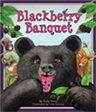
Donna German, my fabulous editor at Sylvan Dell, recently sent me the finished cover of BLACKBERRY BANQUET. I love the way it turned out! Lisa Downey, the illustrator, did such a great job. The bear is adorable; the cover is colorful and inviting. I can’t wait to see it on bookshelves in bookstores or better yet, in the hands of small children!

Another piece of unexpected news that I received this week from Sylvan Dell is that they’re in the process of selecting a plush toy to accompany the book. What would it be? A bear, of course! As soon as I get a picture of what it looks like, I’ll post it too.

Finally, I found out that they plan to release my book in early July, which makes perfect sense as July is Blackberry Month. Mmm…I think the berries will be a little sweeter this summer!

This is an exciting time during the birth of a book. You see, once the acquisition is made and the ink has dried on the contracts, the author often goes into a sort of hibernation period, where he isn’t involved much. At this time, the illustrator is extremely busy doing the art and the editorial staff are making final text reviews and marketing decisions. Then, after a few long months, the author begins to hear about his/her book again. The cover is out, marketing decisions have been made, publication dates are skillfully determined. To me, as the author, it’s like my book has come out of hibernation! It’s very exciting to see.