2

MINI-VIEW: MARILYN MARK BRIGHAM

MINI-VIEWS:

Pint-sized interviews that leave you smiling

MARILYN BRIGHAM is an editor at Marshall Cavendish Children’s Books, where she has been working for over 5 years. She edits everything from picture books and chapter books through novels for both middle grade and young adults. In addition, she oversees Marshall Cavendish Classics, a line of previously out-of-print titles by award-winning authors and illustrators, as well as Board Buddies, Marshall Cavendish’s board book line. On her own time, she loves sports, concerts, the beach, cooking, watching television shows meant for teenagers, and reading magazines while taking a nice hot bath. She wishes she had time to read adult books . . . but there are just too many fabulous kids’ books to be reading. . . . She is enjoying life as a newlywed and lives in Tarrytown, NY, with her husband.

How do you define your role as a children’s book editor at Marshall Cavendish? What have been some of your favorite projects you’ve worked on?

I definitely think of my role as an editor as a helper and co-conspirator with the author; I love the relationships I have with authors where we discuss our vision for the book and I help the author get it there and make it the best book possible. Sometimes the editing process can be a seemingly endless process and takes a while to come together, and sometimes the pieces of a book just fall into place really easily; either way, though, it’s always this great journey and so much fun for me (I do have one of the best jobs on the planet…). And, of course, I love for the kids who read it to have the last word and for the books to really speak to them and who they are right now in their lives—that’s the ultimate goal with every book I work on.

One of my favorite projects to work on was the first novel I ever edited, RETURNABLE GIRL by Pamela Lowell, which followed a 13-year-old foster child in middle school, who ultimately has to decide between her birth mother and her foster mother, and between “being popular” and being true to her best friend, an emotionally disturbed girl who is bullied incessantly for being overweight. I think this book has stuck with me for so long not only because it was my first book, but also because it spoke to the universal experiences—trying to fit in and the need for all of us to have a safe place to call home. It also showed how one person can make a huge difference in your life—the main character and her foster mom really develop this amazing relationship, which is also scary for the main character because loving someone puts you at the risk of being hurt by them as well. I do have a thing for books about foster children—WHITE OLEANDER by Janet Fitch is another amazing book (although that one’s for adults).

Another book I edited that’s definitely high on my list of favorites is PRINCESS PEEPERS, a picture book by Pam Calvert, illustrated by Tuesday Mourning. This is a quirky tale of a not-so-average princess—she’s kind of clumsy and she has this fabulous collection of funky glasses. But when she starts attending school with other the princesses, they make fun of her glasses, which forces the princess to go without them. Well, our clumsy princess is even clumsier without them and has all these funny mishaps . . . until the day she runs into Prince Peerless. Turns out the prince wears glasses too. In the end, Princess Peepers snags the princess and sets off a new trend at the castle (last illustration shows the other princess, royal horses, and other characters from the book, all donning funky glasses). The illustrator did a great job of capturing our special princess, and I loved that overall the story had a great message about being true to yourself and defying stereotypes but that it got across the message without being preachy. It was a familiar concept for a picture book, but it was written and illustrated in such a way that it stands above the competition and has lasting power; I think kids will come back to it again and again and that’s the true test.

We know that all editors are looking for well-written stories, but could you summarize your specific taste in books and which kinds of stories usually catch your attention (or possibly send you fleeing down the hallway ;-)?

I love edgy YA fiction with contemporary settings/issues, chick-lit for MG or YA, funny boy books (particularly for middle grade—see THE ADVENTURES OF BENNY, written and illustrated by Steve Shreve), and books with sports themes (see THROWING LIKE A GIRL, a novel by Weezie Kerr Mackey, and my forthcoming picture book WHEN JACKIE AND HANK MET by Cathy Fishman, illustrated by Mark Elliot, about Jackie Robinson and Hank Greenberg). I am also developing a taste for sci-fi and fantasy, as long as it’s not too high-fantasy (talking animals don’t really do it for me in older fiction, but I love interesting worlds and futuristic societies in which the rules have changed). I also like books that have a multicultural angle or unique perspective (see THE FIESTA DRESS by Caren McNelly McCormick, illustrated by Martha Aviles—sibling story but with multicultural angle). I tend to veer toward quirkiness and humor in picture books, although I also have some picture books coming up that are very sensitive and sweet. I’m not currently looking for folktales. I’m not hugely into rhyming picture books—I think so much more can be done with the language when you’re not confined by rhyme schemes. I’m also not really into historical fiction or nonfiction—but occasionally the right subject matter can grab me.

What is your favorite children’s joke?

Oh, man. This is a toughie. Well, the first thing I thought of was not actually a joke but something my big brother would sometimes sing to my mom when I was a kid: “Hey, Mom, what’s for dinner? Go up your nose and pick a winner…” (How’s that for boy humor?) I think he had a few other rhyming sayings like that. My mom would always laugh it off and tell him to stop being gross. I thought it was pretty funny, too.

Also, my grandfather used to tell a joke about a man who meets a genie and gets to make three wishes; I don’t remember the whole story, but somewhere in the midst of trying to think of his third wish, an Oscar Meyer Weiner commercial comes on the TV. The man starts singing along: “Oh, I wish I were an Oscar Meyer wiener, oh, that is what I’d truly like to be…” and he gets his wish. That always cracked me up, picturing a grown man in a wiener costume.

Actually, any joke featuring an adult in a compromising position is pretty funny to me, even today.

Thanks so much, Marilyn!

3

Packet #4: Done. One more to go…

I’ve turned in and already received the feedback on my fourth packet. Phew!!! Another great experience.

Have I told you how much I admire and adore my advisor Kathi Appelt? Not only is she a fabulous, Newbery Honor-winning author, but she’s a cat-lovin’ Texas gal with a passion for picture books. Now, Kathi has an extraordinary way with words when it comes to the pen, but she’s also the most astute critiquer I’ve ever worked with. Her ability to find what needs work in my writing is so spot-on that I totally trust her opinion and am willing to try anything she suggests (seriously, she could tell me to run out in the street and swing a dead chicken over my head five times to stimulate my creativity and I’d do it!).

Back to the packet; a couple more mss near finished. A brand new one that’s a good start but definitely needs some work (which is expected). Best of all, I’m pushing myself creatively and finding that it’s not so scary after all. And I’ve now got the okay on my long essay and can begin focusing on my presentation for the winter residency. My topic is anthropomorphism with a focus on cats. Yes, CATS. Surprise, surprise. It should be a howling good time. >^..^<
5

10 Ways to Tell If You’re a Vermont College Student…

Only a meager three months into the Vermont College MFA Writing Program and I’ve already discovered there are signs that indicate such enrollment. I’m up to ten so far, and I’d love to hear any others from my fellow classmates. So, here are the signs that let you know you’re really doing the VC MFA program:

1. You know your public library card number by heart.
2. Your public librarians all know you on a first name basis.
3. Dust bunnies have overtaken your house. And you’re okay with it.
4. Your living spaces are consumed with piles of books, notepads, writing implements and computers.
5. You develop a taste for convenience foods.
6. You need new glasses. But won’t take the time to see your eye doctor.
7. You have to ice down your writing hand nightly.
8. Your friends stop calling.
9. Your spouse actually knows what a “packet” is.
10. So does your cat.

(but you’re still smiling!)

Okay, any of your Vermont College students out there, let me hear what your signs are!

Rather than have you read through the comments, here are two more from fellow VCFA-ers:

1. The employees at your local post office know you by name, and already have your return postage stamps ready when you walk through the door (TP: Bet I can guess who your advisor is! ;-).

2. Your spouse/partner not only knows what packet is, but makes dinner for you the few nights before your packet is due.

1

MINI-VIEW: ERIN CLARKE

MINI-VIEW:

Pint-sized interviews that leave you smiling.

Erin Clarke is a senior editor at Alfred A. Knopf Books for Young Readers, an imprint of Random House Children’s Books, where she has worked for eleven years. Authors and illustrators with whom she works include Markus Zusak, Julia Alvarez, Meghan McCarthy, Lesley M.M. Blume, Anna Alter, Mark Alan Stamaty, Karen Foxlee, Mick Cochrane, Barbara Jean Hicks, and Sue Hendra. She lives in Brooklyn with her husband and one-year-old daughter, who enjoys eating broccoli (albeit with lots of butter).

How did you discover MONSTERS DON’T EAT BROCCOLI and what was your reaction? What are your hopes for this title?

I first saw Sue Hendra’s illustrations for the project in the UK in 2005, and I instantly fell in love with her monsters. Sue had written a text for a novelty book, which is the format in which the British publisher originally wanted to publish MONSTERS DON’T EAT BROCCOLI, but I thought it would work well as a traditional picture book. I had just worked with Barbara Jean Hicks on a wonderful picture book called THE SECRET LIFE OF WALTER KITTY and thought her sensibility would match Sue’s illustrations perfectly.

My hope for this book is that kids will want to read it again and again and again (the real sign of a successful picture book in my mind). The text is bouncy and fun to read aloud, and the illustrations are hilarious, vibrant, and full of details to pore over. Of course, I love the message about eating healthily and the fact that it is conveyed in a completely non-didactic way.

The bold, colorful artwork in MONSTERS is a perfect match with the text, as it not only supports the words but enhances them. Can you tell us about the process you went through in matching up Barbara Jean Hicks and Sue Hendra?

I think I answered this above, but with all picture books, you want to the text and illustrations to work together equally to tell a story, and Barbara and Sue managed to do just so with incredible humor and fun. They share a similar sensibility even though they use different mediums.

What’s your favorite children’s joke?

My favorite book-related joke:

Q: What do Sea Monsters eat for lunch?
A: Fish and ships

Thanks so much, Erin!

1

HAPPY HAGFISH DAY!

Happy Hagfish Day!

It’s finally here–the first annual Hagfish Day, to celebrate the “beauty of ugly.” Ooze on over to the WhaleTimes website for more information on the hagfish and other less-attractive but important marine creatures.

Hagfish, Queen of Slime
Mass-producing gallons of
Ooey, gooey, ooze.

Okay, now it’s your turn to write a hagfish haiku. Any takers???
1

MINI-VIEW: BARBARA JEAN HICKS

MINI-VIEWS:
Pint-sized interviews that leave you smiling.

BARBARA JEAN HICKS lives in Oxnard, California with her partner Michael and a bad-tempered cat. She is the author of five children’s picture books. MONSTERS DON’T EAT BROCCOLI is her second book about monsters and her third book in which food is an important element. She is working on her relationship with vegetables but has a monster appetite for fun! To learn more about Barbara and her books, visit her website.

MONSTERS DON’T EAT BROCCOLI is a rollicking book with lots of fun concepts and language. Can you tell us a little about how the story came to be?
An interesting story: the pictures came first! Sue Hendra had created a dummy for a pop-up book that was about all the crazy things that monsters eat. Erin Clarke, the editor I had worked with on THE SECRET LIFE OF WALTER KITTY, loved Sue’s monsters but wanted them in a traditional picture book. I feel so fortunate that she decided to ask me if I might be interested in working with the sketches Sue had already done. I fell in love with Sue’s cheerful, colorful monsters! I wanted her to be able to use at least some of the fun, funny sketches she’d already created, so I decided to keep with the eating theme. When I found a sketch of the monsters having a food fight with vaguely broccoli-looking trees they’d been munching on, I immediately thought of the way so many parents get their kids to eat broccoli by calling it little trees.

I turned the “what monsters eat” theme on its head and focused instead on what monsters (and their child counterparts) often don’t eat—their veggies. A phrase popped into my head from the old fairytale JACK AND THE BEANSTALK, and I turned that on its head as well. Thus: “Fum, foe, fie, fee, Monsters don’t eat broccoli!” I rearranged the sketches, leaving out some and suggesting others to make the book a little longer, as part of the process of writing the text. I had lots of fun, and the text came very quickly.

MONSTERS sends a great message to kids about healthy eating. I know you’re active in promoting healthy eating for children. Can you tell us a little bit about this and how you’re hoping that MONSTERS will help the cause?
The creative process is so fascinating. When we write (or draw, or sing, or do any number of other creative things), our subconscious draws from many disparate memories, ideas, emotions and experiences and makes connections we aren’t even aware of on a conscious level. I wrote this story thinking it was about the power of a healthy imagination—which it is. But it’s also, perhaps even more, about healthy eating habits. I grew up with a father who loved to garden and was crazy about fresh vegetables—and a mom who didn’t much like vegetables. So we had opportunities to eat lots of fresh vegetables but were never forced to eat them. I had my favorites (like corn on the cob and peas right out of the pod), but other veggies have been an acquired taste. Many of them I’ve discovered just in the last year, when my partner was diagnosed as pre-diabetic. We went on the South Beach diet, which is heavy on vegetables and whole grains. This new way to eat totally reversed the blood sugar problem, and we both dropped pounds as well. We discovered a lot more vegetables we liked, and those have become a regular part of our diet.

When the reviews started rolling in for MONSTERS DON’T EAT BROCCOLI, every single one commented on the “healthy eating” aspect of the story that I hadn’t even realized I’d written! I also got lots of comments back when I sent a notice out to my e-mail list that the book had hit the bookstore shelves. One was from a school superintendent I had worked with in the past who asked if I would be interested in partnering with the district to encourage healthy eating habits in the elementary schools. I realized that many kids don’t have the advantage I had as a child of a big garden in the back yard, and I liked the idea. Obesity and diabetes are increasingly significant problems in this country, not only for adults but for children, and poor diet is the main culprit. Lack of exercise is a second element that I’ll also address in the program I’m developing for the district, which we have dubbed the Rio Healthy Kids Initiative.

My book launch for MONSTERS DON’T EAT BROCCOLI was part of a weekend long fundraiser in cooperation with our local Barnes & Noble for the Initiative. We not only had great fun, we taught kids the “broccoli chant,” engaged them in a healthy-eating poster contest, and had a slide show about ways to eat healthy even at fast food restaurants.
I’ve discovered that several members of my local SCBWI chapter have developed or worked with nutrition curricula for elementary school children and are willing to share their materials and experiences with me as I develop the program for the Rio Healthy Kids Initiative, which I hope to make available in other schools as well.

What’s your favorite children’s joke?
Appropriately enough, when we’re talking about healthy eating, it’s a fruit joke.

Q: What was Beethoven’s favorite fruit?

A: Ba-na-na-na (sung to the tune of the opening of Beethoven’s Fifth!)

Thanks, Barbara Jean! For more information on Barbara Jean’s blog tour schedule, read on!

SATURDAY OCTOBER 17: Review: Elizabeth Bird for School Library Journal and Publishers Weekly. “More fun than a book with a message should ever hope to be.”

SUNDAY OCTOBER 18: Book Trailer: Monster reviewers Gene Sisko and Roger Elbert go two thumbs up for BROCCOLI!

MONDAY OCTOBER 19: Interview: Terry Pierce talks to Barbara about children and healthy eating.

TUESDAY OCTOBER 20: Interview: Little Willow talks to illustrator Sue Hendra, editor Erin Clarke, and Barbara in a single interview.

WEDNESDAY OCTOBER 21: Interview: Sherrie Petersen talks to Barbara about the switch from writing romance to writing children’s books.

THURSDAY OCTOBER 22: Interview: Terry Pierce interviews editor Erin Clarke (Random House Knopf).

FRIDAY OCTOBER 23: Interview: Jaime Temairik and the Zombie talk to illustrator Sue Hendra in sock puppet form for Zombie Broadcasting Services. You’ve never seen an interview like this one!

SATURDAY OCTOBER 24: Podcast Review: Mark and Andrea’s Just One More Book audio blog. “Gasping, gobbling, grinning, crunching and belching, seven sherbet-coloured monsters revel in outrage at their broccoli-loving readers in this rhyming enticement to eat green.”

SUNDAY OCTOBER 25: Book Trailer: Cecilia Olivera-Hillway of Polar Twilight animates Sue Hendra’s cheerful monsters as giant broccoli falls from the sky.

MONDAY OCTOBER 26: Photographs: The Broccoli Book Launch, August 28, 2009, Barnes & Noble Ventura. Seen: Chow, Chompers, and Barbara Jean the Story Queen!

TUESDAY OCTOBER 27: Downloads: For kids, Sue Hendra’s coloring pages for MONSTERS DON’T EAT BROCCOLI. For adults, The MONSTERS DON’T EAT BROCCOLI Broccoli Fan Cookbook!

WEDNESDAY OCTOBER 28: Podcast Interview: Suzanne Lieurance talks to author Barbara Jean Hicks about BROCCOLI, her life, and writing on Book Bites for Kids (Blog Talk Radio).

1

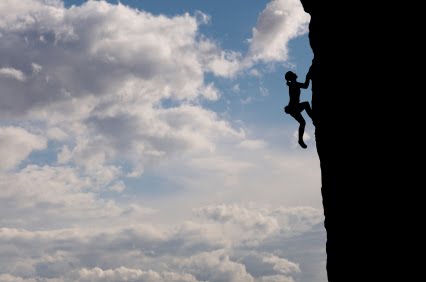
Revisions: Climbing to the Top

I am learning so much this semester in the Vermont College writing for children program. I’ve been writing with purpose for about ten years now, so I thought I had a little bit of a handle on picture books, but I’ve realized there is so much to learn. So much more.

One of the things that I’ve found most fascinating is revision. Revisions are a part of writing; we all get that. First drafts are one thing. Revisions are another. This is where an author rolls up her sleeves, puts on her editorial hat and starts analyzing her work. She figures out what needs to be improved, shows her work to other writers for feedback, and takes out the machete to cut words and the polish to make her writing shine. Yeah, I “got” all that.

Then I started the Picture Book Intensive semester. I now see revisions not as a “one-stop” reworking attempt where I try to make my work shine in one fell swoop but instead as working my way up a series of steps. Now, each revision feels much more deliberate because I know that sometimes I have to climb up to the next step, in order for me to gain steady ground so I can climb up to the next level (eventually reaching the top).

For example, one particular piece I started with was over 800 words long. My first revision challenge was to cut it by 80%. I did that, feeling quite proud of myself; but then despite its 200-word length, I still had to cut more to eliminate places where I was doing the illustrator’s job (meaning, describing too much). Okay, that was the next draft. Once I had my story down to 100 words, my next revision challenge was to write it in rhyme. Okay, I did that, and quite happily. I’d thought about writing this piece in rhyme before, but I was so lost in my overly narrative language that I didn’t know where to begin. You see, I had to go through all of the other revisions so I could climb to a place where I could see my work in rhyme. Kind of like climbing a cloud-encased mountain until you can break through and more clearly see the view. After I wrote it in rhyme, my next challenge was to improve the format and structure. Which I’ve done. And working on.

My point is, it’s been eye-opening for me to now see revisions more as climbing to the next level, so I can see my work differently, thus allowing me to again take it to another level. Like mountain climbing.

Now, I must give credit where credit is due. My advisor acts as the rope and pitons that keeps me safely secured to the mountain. She has guided me along and given me many challenges to help me work my way through my stories, much like a climber works his way up the face of a granite dome. And my classmates are like my climbing buddies—belaying me, guiding me, letting me know I’m not alone.

It’s seeing the revisions as a series of levels, which must be reached before proceeding to the next that I find so fascinating. Not one fell-swoop, but necessary steps for the climb.

1

Hagfish Haikus: Hagfish Day October 21

Okay, I know you’re wondering how on earth Hagfish Day ties into writing. Or perhaps you’re even wondering, “What’s a hagfish?” “And why does it deserve a special day?” Read on. It WILL make sense. Scouts honor.

I’m priviledged to be part of the board of directors of Whaletimes, Inc., an educational non-profit organization that promotes marine science awareness to K-12 students and their teachers. This year, they’re kicking off the first national Hagfish Day on October 21 (it will always fall on the third Wednesday of October). You might ask, why celebrate hagfish? Well, the idea is to celebrate the beauty of ugly (and trust me, after one glance at this picture, you can see why the hagfish qualifies).

Let’s face it, not every sea creature can be an adorable seal with those big brown eyes, or have the striking markings of an Orca, or the charming personality of a dolphin. Some animals are just plain ugly; but that doesn’t mean they’re any less valuable in the web of life and don’t have their own merits. Hence, Hagfish Day was created!

After you finish reading this post, click here to discover all kinds of information about Hagfish and some other ugly sea creatures. Whaletimes has developed activities that include an Ugly Beauty Contest, classroom activities, Hagfish Haikus and Wish Poems (see–this is the part where it ties into writing–I mean, who hasn’t been tempted to write a hagfish haiku? You know you want to!). In fact, if you write a hagfish (or other ugly marine animal) haiku, send it my way too. I’d be happy to post it here on my blog, on Hagfish Day!

And while you’re at the Whaletimes site, check out the other cool things going on–like the new Creep into the Deep program (done in cooperation with NOAA), which puts kids as close to being on a deep sea dive as they could get.
Happy writing!