2

MINI-VIEW: ALEXIS O’NEILL

MINI-VIEWS:
Pint-sized interviews that leave you smiling.

ALEXIS O’NEILL spends a good portion of the year visiting students in schools all around the country. She is the author of LOUD EMILY (Simon & Schuster), THE RECESS QUEEN (Scholastic), THE WORST BEST FRIEND (Scholastic), ESTELA’S SWAP (Lee & Low) and fiction and nonfiction for Cricket, Spider, Cobblestone, Calliope, Faces, and Odyssey. A writing teacher for UCLA Extension’s Writers’ Program, she is also a Regional Advisor for SCBWI in California. A popular presenter, she writes a column for the SCBWI Bulletin called, “The Truth About School Visits.”

I was so pleased when Alexis–my SCBWI regional advisor, mentor and friend–agreed to share some of her expertise with us.

What piece of advice you would offer to an author who is preparing for his/her first school visit(s)?
First, identify the strongest ways your book and your presentation connect with current the educational standards. Make sure that your brochure and marketing materials spell out these connections. This helps schools see that your visit complements their efforts to achieve standards and is not just a frill.

Next, no matter the age of the audience – from kindergarten to high school, think “interactive” when planning your presentation. Audiences like to be engaged. Get them to respond in more ways than just through a question & answer session. Use lots of visuals. Switch your delivery modes within your session so that it’s not just Author-talking and Audience-listening. (For example, clapping, singing, chanting, figuring out a mystery or puzzle, acting in readers theater, being involved in demonstrations all engage audiences.) Leave the audience with advice or tips that empower them to do something better when they leave your assembly than when they came into your assembly.

What have you found is the most effective way to get bookings for school visits (besides writing a great book)?
Most people hate to hear this (because they think there is a simple, quick, magic formula), but almost all school visits come from word-of-mouth recommendations. To become known to audiences so that word can spread, beginners should first appear at as many local events as possible where they may come in contact with teachers, librarians and parents. It means getting to know – and observing – other authors & illustrators who do presentations to learn from them and network with them. (For more details, see my article, ”How to Get Gigs,” on page 7 in the July/August 2007 SCBWI Bulletin.)

What is your favorite children’s joke?
Q: What happened to the pirate with the lame sense of humor?

A: He had to walk the prank.

Thanks so much, Alexis!

1

Speaking of Rhyming

I’ve had a nice response to Kristin Daly’s Mini-View and her advice on writing in rhyme (special thanks to those who emailed me :-). It seems that writing in rhyme, whether in the form of a poem or a story, is a longstanding love for many children’s writers (this writer being one!). So, on that same line, pop on over to The Write Marbles for an interview with poet Greg Pincus. Greg gives a great writing tip, shares the benefits of working in library and of course, fills us in on some fibbery!

1

MINI-VIEW: KRISTIN DALY

MINI-VIEWS:
Pint-sized interviews that leave you smiling.

KRISTIN DALY discovered her love of children’s book in high school, when she worked at her local public library. In May 1999, she began working at Golden Books as an Editorial Assistant, working on picture books, series fiction and easy readers. In January 2002, she began working at HarperCollins Children’s Books, where she now works as an editor. Her early work focused on mostly picture books and easy readers, but now she edits all levels of children’s books. Currently, she is especially excited to be working with best-selling author Gary Blackwood on his first I Can Read Book, The Just-So Woman and newcomer Sudipta Bardhan on her first HarperCollins picture books, Snoring Beauty and Hampire! I was delighted to have met Kristin at a recent SCBWI retreat.

You have a lot of experience editing picture books, easy readers and rhyming stories. What advice would you give to a writer who is contemplating writing a story in rhyme?
I actually have two pieces of advice! The first is to Make Every Line Count. In writing rhyme, it’s so tempting to make yourself and your story slaves to the rhyme and meter. There are two immediate signs that you’ve fallen into this trap: The first is if you find that you’ve been adding unnecessary adverbs, adjectives, and articles in an effort to meet the syllable count of your meter. The second is inverting the object and verb of a line to read something like, “His carrots he never ate in haste,” just because the line before ended with “taste.” Writers of rhyme should always watch out for empty calories, or all of that “filler” material that may sound good, but doesn’t move a story along at all. If you find yourself writing lines and adding words simply to meet your meter or rhyme scheme, you are filling your story with empty calories.

My second piece of advice is to read your work aloud, because although the rhyme and meter may look fine on the page, when you read your verse aloud any forced rhyme or uneven meter will jump right out at you. I do this as an editor, too–whenever I’m editing a rhyming picture book text, I close my office door and read the text aloud to myself several times to make sure everything sounds perfect. It’s the surest way to know whether or not a rhyme is really working.

It seems that a current trend amongst many easy reader publishers is toward featuring licensed characters. Do you have any advice for someone who wants to write ”non-licensed character” easy readers for the trade market?
While it’s true that more and more licensed characters are popping up in easy-to-read books these days, this isn’t necessarily a new trend. Licensed characters have been appearing in easy-to-read books for years; it just seems new because there are so many of licensed books right now. That said, not every easy-to-read line publishes books featuring licensed characters, and even those that do–such as Random House and Harper–generally do not exclusively do so. It’s the same with nonfiction–some easy-to-read lines publish a ton of nonfiction, some publish a little, and others none at all.

And so my best advice to a writer of easy-to-reads is the same as it is for writers in any genre: Know your market. Go to bookstores and libraries and actually look at the different easy-to-read books out there. Look at titles individually, and look at the easy-to-read lines as a whole. Take the time to become familiar with the different lines, because each has its own distinct personality. And within each easy-to-read line, read some books at different levels. Which houses are publishing more original (as opposed to licensed) beginning readers? Which ones seem to publish more books at the same “level” as your own manuscripts? (For example, while Harper’s I Can Read! line technically publishes up through Level 4, we tend to do more titles at the younger levels, from My First up through Level 2.) What types of stories are the different lines publishing–who seems to focus on Frog-and-Toad type friendship stories? Who does easy-to-read poetry or nonfiction? And so on. The more knowledge you have about the market, the more effectively you’ll be able to target your submissions, and the greater the chance that your manuscript will find the best home.

What’s your favorite children’s joke?
Q: Why do elephants paint their toenails red?

A: So they can hide in a strawberry patch.

(Corny, I know, but it still makes me laugh!)

Thanks so much, Kristin!

2

Making It Easier for You

In case you hadn’t noticed, I just added a cool little feature to my blog. See it? Over there–on the right. That little box that says, “Subscribe.” For you busy, busy folks who enjoy visiting my blog (thank you :-), I’m trying to make things easier for you. Isn’t that nice of me? 😉 I knew you’d appreciate that.

Here’s how it works: If you sign up to subscribe, an email will automatically go to you that includes my most recent post. Isn’t that grand? It’s like having me show up at your home or office, but without the nasty embarrassment of catching you in your bathrobe or with curlers in your hair!

So go ahead, sign up now! And once again, thanks for stopping by!

5

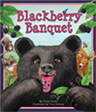
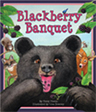
Children’s Book Trailer: Blackberry Banquet

//www.youtube.com/get_player

Well, I did it! I plunged into the deep, dark waters of video promotion (where I’d never swum before) and made a book trailer for Blackberry Banquet. And it was really fun! I was surprised at how easy it was for me–it took about ten hours to create, plus another couple of hours to tinker with (it reminded me of writing a story~ how I “think” I’m finished but then I keep going back to tweak it here and there until I have it exactly like I want it).

So, here it is! Drum roll, please (drrrrrr…drrrrrr…drrrrrr)!

3

MINI-VIEW: STACY CANTOR

MINI-VIEWS:

Pint-sized interviews that leave you smiling.


STACY CANTOR is an associate editor at Walker Books for Young Readers, a publisher known for creating fun, quirky picture books. I had the pleasure of meeting Stacy at a recent SCBWI Retreat where she graciously shared her expertise with us and gave us an inside look into Walker BYR. Stacy had previously worked at Bloomsbury Children’s Books and as a writer for a book packager in Chicago, Illinois. Her interests lie primarily in literary, contemporary young adult fiction and vibrant read-aloud picture books. Her favorite projects thus far have been two novels called Dragon Slippers and Notes From the Teenage Underground, an all-encompassing (but very rewarding) project called The Ultimate Teen Book Guide, and a forthcoming picture book about a little girl who has monsters move in next door. Stacy also spent a summer as an intern for Viking Children’s Books, where she honed her skills reading the slush pile.

You enjoy funny, quirky picture books. I’ve often wondered what constitutes funny/quirky versus over-the-top ridiculousness (pushing the silly envelope too far). Could you define this more specifically and give some examples?
It’s a tough question! I feel like it’s easier to explain what I think does work than what I think doesn’t. Maybe it’s because it’s rare to find a book that pushes silly too far—I mean, I grew up on Dr. Seuss! How much sillier can you get?

Of course, there are different brands of funny. I tend to love word play/pun books, like Walker’s Gimme Cracked Corn and I Will Share by Kevin O’Malley, which is just about the epitome of a groan-worthy pun book, but somehow amidst the chicken and egg puns, it just works! (It also just debuted on the NYT Bestseller list! Hurray!) I’ve also recently bought a picture book manuscript called Animal House by Candace Ryan, which combines really clever wordplay like living in a “kangaroom,” keeping food in a “refrigergator,” and putting dirty clothes in a “hamster.” These sorts of funny wordplay books make great read-alouds.

Then there are the silly character picture books. I loved Amelia Bedelia when I was growing up (you know, the very literal housekeeper, who actually dusted the drapes by putting dust on them?) and maybe that’s why I’m such a fan of silly characters now. Walker’s recurring character picture books by Matthew McElligott about Backbeard the Pirate (Backbeard and the Birthday Suit, Backbeard: Pirate for Hire) are just plain hilarious. I think kids really love “comedy of errors” type picture books.

Some picture books rely on the artwork for the real humor. Another character that we publish at Walker is Millie the Cow, in Millie Waits for the Mail and Millie in the Snow by Alexander Steffensmeier. Readers will love to pore through the artwork and find all the different little details that the artist has added in, like a pair of rowdy chickens who are sprinkled throughout the spreads with hilarious antics.

And then there’s Adam Rex’s Frankenstein Makes a Sandwich, which may be my most favorite funny picture book out there today. It combines everything!

If you’re worried that your picture book manuscript might be pushing the silly envelope too far, see if it makes kids laugh or not. They’re a tougher audience than you might imagine. If they’re groaning or thinking that it’s stupid, odds are an editor will think so too.

We all know about the dreaded “slush pile.” What is the most common mistake you see in manuscripts that come from it?
Not enclosing a self-addressed stamped envelope! It seems obvious, but you’d be surprised how many people don’t include it. And we can’t respond unless we can do it via the USPS. There’s just not enough time or energy in the day to phone or email everyone.

A more helpful piece of advice for those of you who know better than to skip the SASE is that we get a ton of submissions for genres that we just don’t publish. Easy-to-reads, early chapter books, fantasy, even adult books. You will really never find these types of books on the Walker BFYR list, so asking us to consider them is really a waste of our time. It really makes it seem like the submitter didn’t do their research before sending it to us, too.

What’s your favorite children’s joke?
Q: What do you call cheese that isn’t yours?

A: Nacho cheese!

(Terrible, I know. Maybe it says something about my sense of humor after all…)

Thanks, Stacy!

2

Blackberry Banquet Off to the Printer!

Blackberry Banquet was sent to the printer today. Yea! Now that the writing is complete, the illustrations finished, and the design and layout all done, it’s in the hands of the printer. Now, one might think this is when a writer can lean back, sigh and take a rest, but au contraire. Now is when a whole different kind of work begins–promotional marketing!

Just yesterday I assembled my 3-ring binder to organize all of my notes and ideas for marketing Blackberry Banquet. I have to set up book signings, design promotional materials, make announcements, make changes in my school presentations, determine appropriate book awards , make website changes, develop some interesting ideas and contests for my blog, create a list of reviewers and business professionals to inform, and of course, keep in touch with Sylvan Dell’s fabulous publicist to that we can work together on our strategy.

It doesn’t sound too glamorous, does it? Well, it isn’t. But it’s a big part of what every author needs to do if they want their book release to be successful. That’s the part “they” don’t tell you about when you’re dreaming of becoming a published children’s author ;-).

Oops–just thought of a great idea–hmm…I wonder how much a Blimp would cost?
3

Writing Retreats: Get Outside of Your Box!

This past weekend I attended a fabulous writers’ retreat through the Ventura/Santa Barbara SCBWI chapter. I spent Thursday and Friday packing my book bag (loaded with 13 critiqued mss for my fellow group members, my notebooks, first pages, complete mss in case my dream miracle occurred and an editor asked me if I had the complete ms on me so she’d have reading material on the plane) and my personal belongings (still managed to forget my robe–nighttime sprints to the bathroom way down at the end of the hall were interesting, to say the least).

We spent two days together–40 attendees and 3 editors. We read, discussed, mentally cheered for each other, felt each other’s disappointments, joined in each other’s hopes, helped each other to resolve our story glitches, all as we reviewed our precious works. Sunday morning, as I was in my room readying myself for the final push, I-Pod a blazing, I was dancing. Yup, dancing. Right there in my tiny little dorm room. I couldn’t help it. I LOVE being with other writers and kidlit industry folks! It’s so uplifting (and exhausting!). There’s an energy that children’s writers share that I’ve never experienced anywhere else. It’s another reminder of why I love what I do. And why it’s worth the 3.5 hour drive I have to make to these kinds of things (yes, I do officially live in the middle of nowhere).

Why do I bring this up? Because all too often it’s easy to just stay home. It’s comfortable, easy and cheap not to participate. I know. Been there, done that. But as I was driving home from this weekend’s retreat, it occurred to me that five years ago I made a resolution to step outside of my comfort zone. I took that first courageous step and signed up for a writer’s retreat. I didn’t know a soul there, other than my regional advisor. I’ll admit, I was nervous. Okay, scared to death. I’m basically an introvert, so I was definitely stepping out of my comfort zone. Like stepping off the Titanic–before it hit the iceberg.

But guess what? I survived. I learned that attending writing events was a good thing. I made connections and improved myself as a writer. Five years later, ironically at the same location as the first retreat I attended, I could walk into a room and feel like it was a high school reunion (no, better than that–none of us had gotten bald or fat since we last saw each other). I connected with my old friends, met new ones and could easily chat with our guest editors (a big difference from the time I almost sprouted a second tongue just trying to say hello to Arthur Levine :-}.

So, the next time you get one of those retreat fliers in the mail, don’t sluff it off in the trash. Think about stepping outside of your comfort zone. Stop dreaming about moving your writing career forward and do it!

Onward ho!

2

MINI-VIEW: BRUCE HALE

MINI-VIEWS:
Pint-sized interviews that leave you smiling.

I first met Bruce Hale a few years ago, when he had trekked from his beachside community of Santa Barbara all the way to the high desert (where I live) to do school visits. He is a delightful and informative speaker to both adults and children. Bruce has written and illustrated nearly 20 books for kids. His Chet Gecko Mysteries series includes: The Chameleon Wore Chartreuse, The Big Nap, Farewell, My Lunchbag, The Malted Falcon and others.

You could say Bruce has a thing for lizards. He also has created five Hawaii children’s books, including Legend of the Laughing Gecko, Moki and the Magic Surfboard, and Moki the Gecko’s Best Christmas Ever — all starring Moki the Gecko. He’s taught writing workshops at colleges and universities, and spoken at national conferences of writing, publishing, and literacy organizations. On top of that, Bruce has visited elementary schools across the country, from Hawaii, to Kansas, to Pennsylvania.

Mystery plots involve so many factors–the main plot, subplots, clues, misdirections, red herrings, etc.–how do you organize all of these elements for a particular story (do you plot everything out in advance or determine things as you go along)?
One time, I tried to write a mystery the Steven King way — just put two characters in a room and let them talk. 100 pages of rambling story later, I realized that Uncle Stevie’s way was not for me. I work best from at least a rough plot outline. Here’s how I do it:

First, I figure out the crime, then whodunit, then how Chet Gecko will discover/blunder across that. Then, I come up with the clues, red herrings, and obstacles. Once I have the ending planned and the rest of it loosely organized — I usually leave the last quarter of the book unplanned, to leave room for happy discoveries — then I write a fast and sloppy first draft. And after that, it’s revise, revise, revise — until all plot holes are plugged and the story is finished.

Other than reading a lot of mysteries (because we all know that reading the genre you want to write is key), what advice would you give to someone who wants to write a mystery novel for children?
Cultivate a curious state of mind. When you’re out in the world, observe human behavior and construct their back-stories and motivation. Is that kindly old gentleman at the Starbucks secretly smuggling people into the country? Is the kindergarten teacher plotting a take-over of the school? Muse and wonder and daydream. From that comes mystery.

What’s your favorite children’s joke?

Q: Why are a gorilla’s nostrils so big?

A: Because his fingers are so big.

Thanks, Bruce (I know some 4th grade boys who will love that one!)